





About the author
 Octavia Cephalo
Brand Ambassador
Brand Ambassador
Featured Article

Recent Posts


You’ve made the investment. The new website is live, the visual identity is stunning, and the initial ROI metrics are positive. You’ve achieved the New Year, New Momentum you planned for. But here’s where most organizations let momentum slip: the hard work of branding is not launching a new identity; it’s maintaining it.
A brand identity is a fragile asset. Its strength is not derived from its beauty, but from its consistency. If your new logo is pixelated on LinkedIn, your primary color is slightly off on a PDF, or your brand voice changes between your social media and email marketing, you risk diluting the multi-figure investment you just made.
Compelify knows that inconsistency is the silent killer of brand equity. It breeds customer confusion, erodes trust, and forces your audience to work harder to recognize you. This year, maintaining your fresh identity across every touchpoint must be treated as a critical operational task.
Why Inconsistency is a Growth Killer
Consistency isn’t just about looking neat; it directly impacts your bottom line.
- Brand Recognition: A unified visual identity across all platforms can increase brand recognition by up to 80% [1]. Recognition translates directly into trust and reduced cognitive load for the customer.
- Customer Trust: When a customer encounters the same professional visual standards everywhere—from your corporate site to your customer service portal—it signals organization and reliability. Inconsistency, conversely, signals disarray.
- Wasted Spend: If half of your social media ads use a legacy color palette and the other half use the new one, you are effectively splitting and wasting your media budget by confusing the market about who you are.
The Compelify Consistency Checklist: 4 Pillars of Maintenance
Sustaining a strong brand requires strict governance across all digital and print assets. We focus on four non-negotiable pillars of consistency:
- Codify and Centralize Your Brand Assets (The Single Source of Truth)
The foundational cause of brand drift is distributed, outdated assets. Stop relying on shared drives and individual desktops.
- Implement a Digital Asset Management (DAM) System: Every employee and partner—from the social media manager to the design agency—must pull approved assets from one central location. This includes high-resolution logos, approved imagery, primary and secondary color codes, and official typography files.
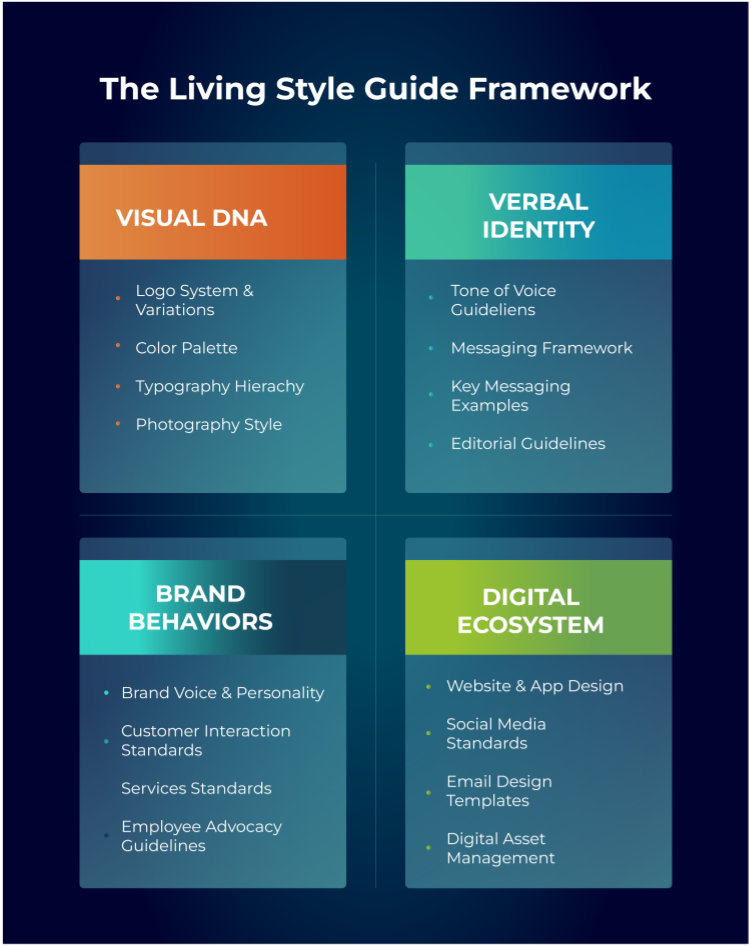
- Brand Guidelines as Gospel: Your brand guidelines document must be mandatory reading and easily accessible. It must specify not only what colors to use, but how to use them (e.g., proper logo clear space, approved co-branding rules).
- Color Codes: Ensure your team understands the difference between the color codes required for different applications:
- HEX Codes (Web)
- CMYK/Pantone Codes (Print)
- RGB/RGBA Codes (Digital screens)
A seemingly minor error in these codes can make your primary color look dull or sickly in print.
- Govern Typography and Tone of Voice (The Verbal and Visual Link)
Brand identity is more than colors; it’s the entire experience, including what you say and how it looks.
- Standardized Typography: Your brand guideline must clearly name the primary and secondary fonts and specify their usage across all mediums (web headers, body copy, print). Using system default fonts (like Arial or Times New Roman) breaks the visual identity.
- Tone of Voice (TOV) Guidelines: Your messaging needs to be as consistent as your logo. Does your social media voice sound playful while your corporate email is aggressively formal? The TOV guide should detail approved language, use of humor, and how to address customers, reinforcing the brand’s personality through writing.
- Audit Your Live Digital Footprint (The Platform Drift Check)
Digital platforms are constantly updated, creating opportunities for visual drift. You need a scheduled audit plan.
- Profile Images: Audit every profile image across every platform (LinkedIn, Facebook, Instagram, YouTube, etc.) to ensure the logo is the correct, highest-resolution version with the proper cropping and clear space.
- Template Hygiene: Standardize templates for common documents (PowerPoint, Google Slides, Email Signatures). If sales reps use an old signature or marketing uses an old presentation template, the inconsistency is immediately visible to key stakeholders.
- Sub-Brand Consistency: If you operate multiple products or sub-brands, ensure their architecture follows the main brand’s rules (e.g., using the parent brand’s primary font and a coordinated color palette). Inconsistent sub-brands dilute the parent brand’s strength.
- Educate and Onboard (The People Factor)
The failure of brand consistency is almost always a people problem, not a design problem.
- Cross-Functional Training: Every department, from HR (which handles internal templates) to Operations (which may order packaging), must be trained on the new brand guidelines. Don’t assume.
- External Partner Vetting: When you engage a new vendor, printer, or external agency, the Brand Guidelines should be the first document shared. Require them to demonstrate they can adhere to your standards before they begin work.
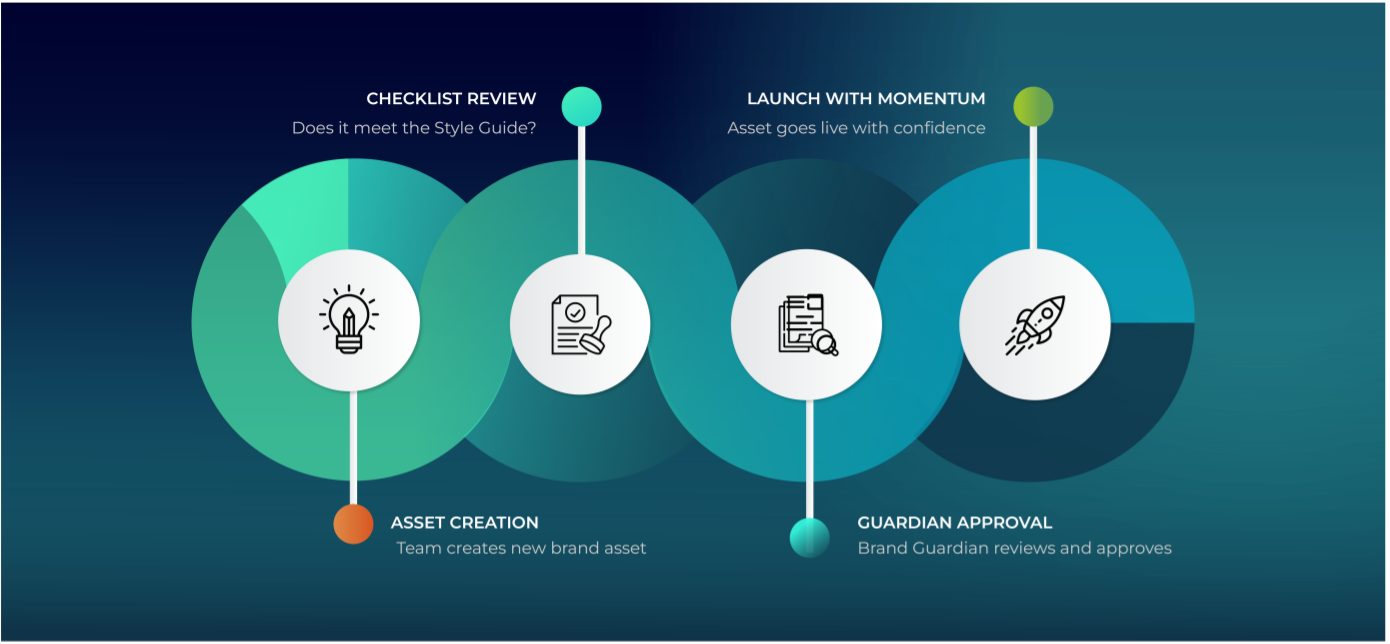
- Establish a Brand Guardian: Designate a specific individual or team (often within Marketing or Creative) whose explicit role is to enforce brand standards and approve materials. This single point of accountability eliminates the “who owns it?” problem.
Momentum is Maintained, Not Launched
Launching a beautiful new brand identity is exciting but maintaining it is what delivers the long-term ROI. By operationalizing consistency through centralized assets, strict guidelines, and comprehensive training, you ensure your investment drives sustained New Year, New Momentum throughout the year and beyond.
Ready to lock down your brand and protect your investment?
[→ Talk to Compelify about creating a robust Brand Governance Plan]
https://compelify.com/lp/newyearnewmomentum
References
[1] Lucidpress. (n.d.). The importance of brand consistency: An ROI study. (Refers to data on consistent branding and revenue increase).
[2] Nielsen Norman Group. (n.d.). Research on Brand Trust and Consistency. (Refers to ongoing data on how visual and verbal consistency impacts user trust).
[3] Web Content Accessibility Guidelines (WCAG). (n.d.). (Refers to standards relevant for maintaining visual accessibility).
[4] Compelify Internal Data. (n.d.). Best Practices in Brand Asset Management. (Refers to internal strategy framework for asset centralization).