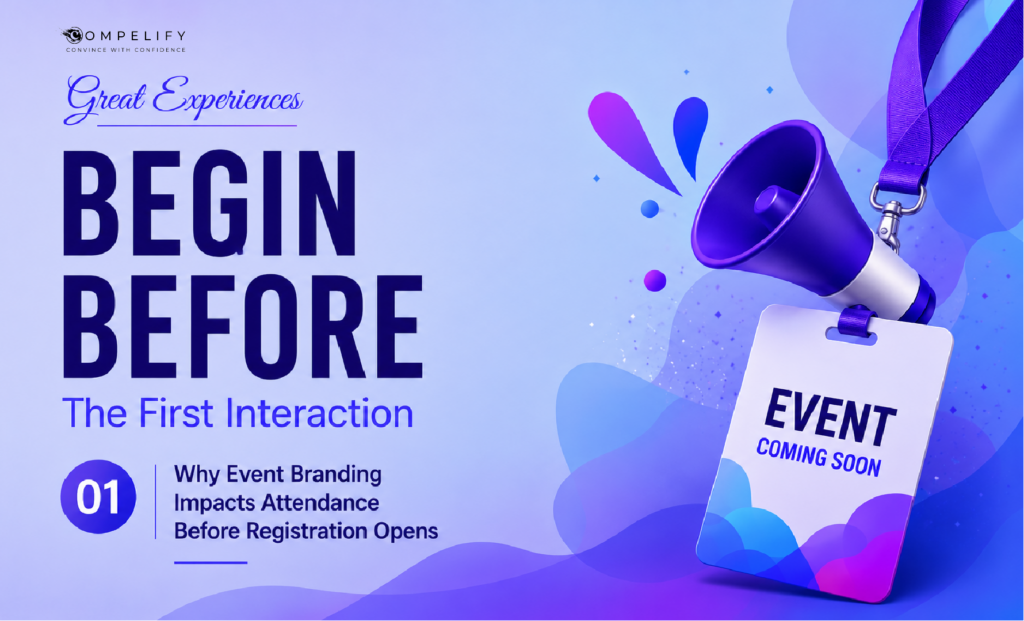
Why Event Branding Impacts Attendance Before Registration Opens
About the author
Octavia Cephalo
Brand Ambassador
Brand Ambassador
Octavia is a remarkably playful and strategic octopus that brings a unique perspective to our creative team. She expertly navigates the depths of branding, exploring the ocean, and connecting with our audience through lively social media interactions.
Featured Article
Browse By Category
Table of Contents
Successful events rarely begin when registration opens.
For many organizations planning conferences, corporate events, trade shows, networking experiences, or large-scale activations, registration often feels like the first major milestone. Marketing efforts intensify, campaigns begin pushing for signups, and teams start focusing heavily on attendance numbers as the primary measure of early success.
The reality is far different.
Long before registration pages ever go live, potential attendees are already forming opinions about whether an event feels worth their attention. The branding surrounding an event begins shaping perception early, influencing how audiences interpret credibility, value, professionalism, and overall excitement before any registration decision has actually been made.
This is where many organizations quietly lose momentum.
Attendance decisions often begin forming weeks before registration opens.
And event branding plays a far larger role in that process than many teams realize.

First Impressions Begin Long Before Registration
People naturally evaluate experiences quickly.
The first time someone encounters an event, they immediately begin making assumptions about what the experience itself may feel like. Visual identity, promotional materials, messaging style, event positioning, and overall presentation begin communicating quality long before attendees fully understand the agenda, speakers, or value proposition.
These early impressions matter.
A professionally branded event immediately feels more credible. Strong visual identity creates excitement while reinforcing legitimacy. Clear messaging helps audiences understand why the event deserves attention before details are fully explored.
Poor branding creates the opposite effect.
Even if the event itself offers tremendous value, weak presentation introduces hesitation early. Potential attendees may unconsciously assume the overall experience will reflect the same lack of polish being communicated externally.
The event may be excellent.
Perception begins shaping expectations before audiences know enough to realize that.
Strong Branding Creates Anticipation
Events operate differently than many traditional marketing initiatives.
Unlike ongoing services or product purchases, events typically rely heavily on emotional anticipation. People do not simply evaluate what an event offers logically. They imagine what attending may feel like.
Will the experience feel exciting?
Will it create valuable connections?
Will attending feel professionally worthwhile?
Will the environment feel memorable?
Branding directly influences these emotional expectations.
Strong event branding creates excitement before details fully emerge. Visual identity begins telling a story about the experience itself. Promotional materials establish tone while helping audiences imagine the value of participation before registration officially becomes available.
This anticipation becomes incredibly valuable.
The more excitement builds early, the easier it becomes to drive engagement once registration opens.
Momentum begins forming before conversion opportunities ever exist.
Event Credibility Directly Influences Attendance Decisions
Attending an event requires commitment.
Unlike browsing a website or clicking an advertisement, registering for an event often requires significant personal investment. Attendees may need to commit time, travel expenses, scheduling flexibility, ticket purchases, or internal approval before deciding to participate.
This increases the importance of trust.
People naturally evaluate whether an event feels legitimate enough to justify that commitment. Strong branding immediately strengthens confidence by communicating professionalism and organizational maturity.
Well-designed event websites create trust.
Consistent visual identity reinforces legitimacy.
High-quality promotional assets suggest thoughtful execution.
These signals help attendees feel more comfortable investing attention long before registration decisions begin.
Weak branding often creates unnecessary doubt.
And uncertainty directly reduces participation.
Perception Shapes Registration Performance
Many organizations focus heavily on driving registrations after launch.
However, registration performance often reflects audience perception built much earlier.
By the time registration officially opens, potential attendees have already been exposed to event branding through announcements, early promotions, social campaigns, speaker reveals, email communication, or initial awareness efforts. Those interactions begin shaping emotional response well before any registration opportunity becomes available.
This means branding influences conversion indirectly.
Events generating stronger early perception often experience higher registration momentum because excitement and confidence have already been established beforehand.
The audience arrives ready to act.
Organizations that underestimate early branding frequently struggle to understand why registration feels slower than expected despite offering strong event value.
Often, the issue begins long before registration itself.
Great Events Begin Before The Event Itself
Successful events create experiences.
That experience does not begin when attendees walk through the door.
It begins the moment someone first encounters the brand surrounding the event itself. Every early interaction contributes to perception, shaping how audiences feel about attending before registration pages ever become part of the decision process.
The strongest event organizers understand this relationship early.
They focus on building anticipation before asking for commitment. Branding becomes part of the attendee journey itself rather than something treated as a secondary promotional tool.
Because attendance is rarely determined the day registration opens.
In many cases, the audience has already started deciding whether the experience feels worth their time long before that moment ever arrives.
And event branding often determines how that decision begins.
Long before the first registration is ever submitted.