We are Your Elite Creative Team To Compel Action

About the author

Octavia Cephalo

Brand Ambassador

Octavia Cephalo

Brand Ambassador

Octavia is a remarkably playful and strategic octopus that brings a unique perspective to our creative team. She expertly navigates the depths of branding, exploring the ocean, and connecting with our audience through lively social media interactions.

Follow Us

Contact Us

Would you like your creative
collateral to be more compelling?

Table of Contents

Businesses spend enormous time trying to improve conversion.

Teams optimize websites, refine marketing campaigns, test advertising channels, adjust pricing strategies, and experiment with countless tactics designed to increase customer engagement. Growth conversations often revolve around improving lead generation, reducing friction, and finding ways to persuade more buyers to take action.

Yet one factor consistently influences conversion more than many organizations fully appreciate.

Perception.

Long before customers begin comparing pricing, evaluating features, or deciding whether a product or service fits their needs, they are already forming opinions about the business itself. Branding shapes those opinions immediately. The way a company presents itself influences how customers interpret quality, professionalism, trust, and overall value before the buying decision fully begins.

This creates an important reality many businesses overlook.

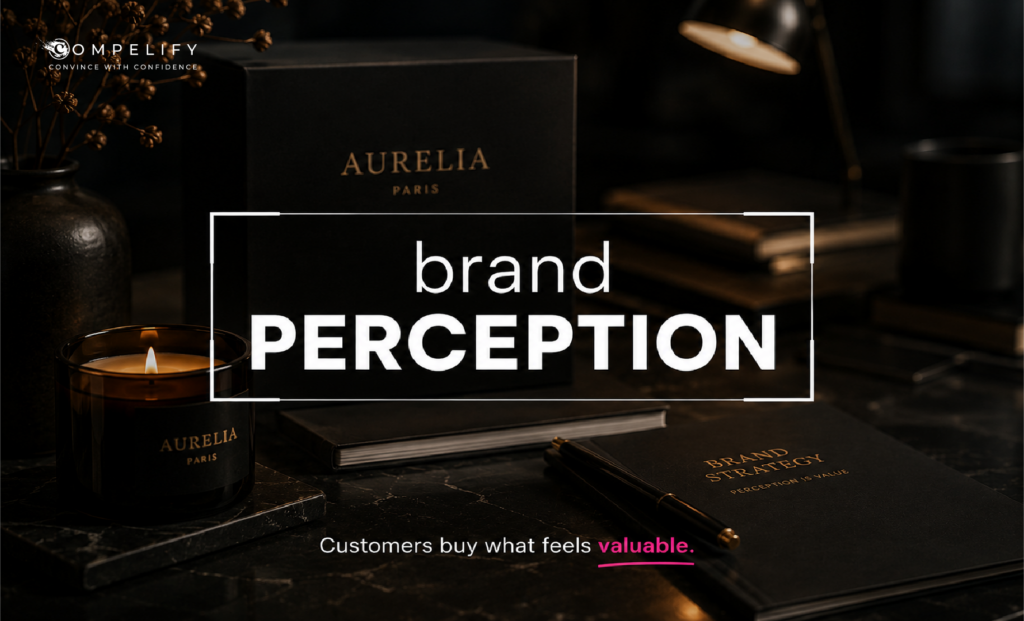
Great brands consistently convert better because customers naturally trust what feels valuable.

And strong branding directly shapes that perception.

Customers Rarely Buy Based On Price Alone

Businesses often assume lower pricing creates stronger conversion.

In reality, buying decisions rarely function this simply.

Consumers constantly evaluate risk whenever they make purchasing decisions. Whether buying software, selecting a service provider, comparing products, or choosing between competing brands, customers want confidence that they are making the right decision. Price certainly influences the process, but it rarely operates in isolation.

Trust often matters more.

This explains why premium brands consistently outperform lower-cost competitors despite charging significantly more. Customers associate strong branding with professionalism, reliability, and quality long before objective comparisons fully begin influencing the decision.

The cheapest option often creates hesitation.

The strongest brand often creates confidence.

And confidence directly affects conversion behavior.

Branding Shapes Perceived Value

Branding influences how customers interpret value.

Two companies may offer nearly identical products or services while generating completely different conversion performance simply because buyers perceive one option as more credible than the other.

Visual identity plays an enormous role in this process.

Professional design communicates competence. Consistent messaging reinforces clarity. Strong brand positioning helps customers immediately understand what makes the business feel trustworthy. Even subtle differences in presentation begin influencing how customers emotionally evaluate the offer itself.

This happens quickly.

A polished website immediately feels more established. Premium visual design suggests attention to detail. Clear messaging helps customers understand value faster.

The offer itself may remain unchanged.

But perception changes dramatically.

And perception directly shapes buying behavior.

Cheap Branding Creates Unnecessary Doubt

Weak branding rarely creates immediate failure.

Its impact tends to happen more subtly.

Businesses with inconsistent design, outdated websites, unclear messaging, or poorly developed visual identity often struggle to understand why conversion remains lower than expected. Traffic may remain healthy. Marketing campaigns may generate attention. Customer interest may appear strong initially.

Yet conversion stays inconsistent.

This happens because branding quietly affects confidence.

When businesses look unpolished, customers begin asking subconscious questions.

Is this company reliable?

Will service quality match expectations?

Does this business feel established enough to trust?

Even if buyers never verbalize these concerns directly, uncertainty begins influencing how they evaluate risk.

And increased uncertainty often leads to hesitation.

Cheap branding rarely destroys opportunity immediately.

It quietly weakens trust before the decision fully develops.

Strong Brands Make Decision Making Easier

The best brands simplify buying decisions.

Customers naturally gravitate toward businesses that feel credible, polished, and consistent because strong branding reduces uncertainty. The buyer feels more comfortable moving forward when the business itself appears confident in how it communicates value.

This is why strong branding consistently improves conversion performance.

Better branding strengthens recognition. Recognition improves familiarity. Familiarity increases trust. Trust reduces perceived risk during decision making.

The customer feels safer choosing the business that appears more established.

This entire process often happens subconsciously.

The buyer may focus on pricing or product comparisons consciously, but emotional confidence begins shaping behavior long before those logical comparisons fully take over.

Strong branding reduces friction by making confidence easier to build.

Conversion Begins Long Before Customers Compare Price

Businesses often focus heavily on pricing strategy while underestimating how strongly perception influences customer behavior.

The reality is simple.

Customers rarely buy solely because something costs less.

They buy when they feel confident enough to trust the business behind the offer.

Strong branding creates that confidence early. It shapes perception, reinforces professionalism, builds credibility, and helps customers feel comfortable moving toward action without unnecessary hesitation.

This is why great brands consistently outperform weaker competitors even when pricing remains significantly higher.

Because branding has never been about making businesses look attractive.

It exists to shape how customers perceive value.

And value perception directly influences whether customers buy at all.

The strongest companies understand this relationship early.

Because customers do not always choose the cheapest option.

But they consistently choose the option they trust most.

And great branding makes trust significantly easier to earn.