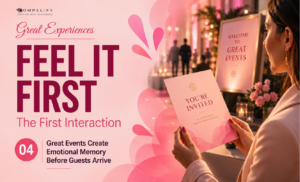
Great Events Create Emotional Memory Before Guests Arrive
About the author
Octavia Cephalo
Brand Ambassador
Brand Ambassador
Octavia is a remarkably playful and strategic octopus that brings a unique perspective to our creative team. She expertly navigates the depths of branding, exploring the ocean, and connecting with our audience through lively social media interactions.
Featured Article
Browse By Category
Table of Contents
Events are often measured by what happens on the day itself.
Organizations evaluate attendance numbers, engagement levels, lead generation, networking opportunities, sponsor performance, audience satisfaction, and overall execution quality once guests finally arrive. Teams spend enormous time coordinating logistics, managing vendors, preparing presentations, and ensuring every operational detail runs smoothly once the event officially begins.
While these factors certainly matter, many organizations overlook something far more important.
The attendee experience begins long before the event itself.
By the time guests arrive, emotional expectations have already been forming for weeks. Every announcement, invitation, promotional campaign, registration interaction, speaker reveal, and communication touchpoint begins shaping how attendees imagine the experience before physically participating.
This process matters because events are rarely remembered purely for what happened.
They are remembered for how people felt.
And emotional memory often begins developing well before guests ever walk through the door.

Anticipation Becomes Part Of The Experience
Most memorable experiences begin before the experience itself.
People naturally imagine future experiences long before participating in them. Vacations create excitement during the planning process. Major product launches build anticipation before release. Entertainment experiences often generate emotional investment weeks before the actual experience begins.
Events function the same way.
Attendees begin mentally constructing expectations early. They imagine the environment, the conversations they may have, the people they may meet, and the value the event may create professionally or personally.
This anticipation becomes part of the experience itself.
Strong event strategy intentionally builds excitement throughout this process. Promotional campaigns should do more than communicate logistics. Branding should do more than look visually appealing. Communication should help attendees begin feeling emotionally connected before the event ever begins.
When anticipation grows stronger, engagement naturally follows.
The event starts feeling valuable before attendance even happens.
Emotional Connection Increases Participation
Attendees rarely engage deeply when emotional investment is low.
Even well-organized events sometimes struggle because audiences arrive feeling neutral. The event may offer tremendous value, but if guests have not developed excitement beforehand, participation often remains passive.
Strong emotional connection changes this behavior.
When attendees feel excited before arriving, engagement becomes more natural. Conversations happen more easily. Networking feels more intentional. Sessions receive stronger attention. Guests actively look forward to participating rather than simply showing up because registration was completed weeks earlier.
This changes how the event itself unfolds.
The audience arrives already invested.
Energy becomes stronger because emotional momentum was built intentionally before event day itself.
The event benefits from anticipation that began developing long before attendees physically arrived.
Every Pre Event Interaction Shapes Memory
Memory is heavily influenced by emotional context.
This makes early event communication incredibly important.
The first invitation establishes tone. Speaker announcements begin reinforcing credibility. Social media campaigns build familiarity. Registration confirmation emails create reassurance. Event websites communicate professionalism while shaping perception about the overall quality of the experience itself.
Each interaction contributes to emotional expectation.
This process often happens subconsciously.
Attendees begin building associations around the event before realizing it. Positive interactions strengthen excitement. Professional branding builds trust. Clear communication reduces uncertainty. Repeated touchpoints gradually increase emotional familiarity with the experience itself.
By the time event day arrives, memory formation has already started.
The event feels familiar before participation even begins.
This directly influences how positively guests interpret the experience once they arrive.
Great Events Focus On Experience Design
Successful event teams understand an important distinction.
Planning logistics is not the same as designing experiences.
Operational execution ensures the event functions properly. Experience design determines how attendees feel throughout the entire journey leading toward participation.
This requires thinking beyond schedules, venues, and programming.
How does the event feel emotionally from the first announcement onward?
Does branding create excitement?
Does communication build anticipation?
Does registration feel professional and effortless?
Do attendees begin imagining the value of participation before event day arrives?
The strongest events intentionally shape these emotional touchpoints early.
Because emotional experience directly influences long-term perception.
Memorable Events Begin Before The Doors Open
Great events are never defined solely by what happens inside the venue.
Long before presentations begin, conversations start, or guests begin networking, emotional expectations are already influencing how attendees perceive the entire experience. Every interaction leading toward event day contributes to anticipation, confidence, and the emotional framework through which the event itself will ultimately be experienced.
The strongest event organizers understand this early.
They recognize that attendees begin forming memories before physically arriving.
This changes how event strategy should be approached.
Marketing becomes experience design.
Branding becomes emotional positioning.
Communication becomes part of the attendee journey itself.
Because memorable events are rarely remembered simply because they were well organized.
They are remembered because they made people feel something meaningful.
And that emotional experience often begins long before the doors ever open.
Sometimes the most important part of an event happens before the event itself even starts.