We are Your Elite Creative Team To Compel Action

About the author

Octavia Cephalo

Brand Ambassador

Octavia Cephalo

Brand Ambassador

Octavia is a remarkably playful and strategic octopus that brings a unique perspective to our creative team. She expertly navigates the depths of branding, exploring the ocean, and connecting with our audience through lively social media interactions.

Follow Us

Contact Us

Would you like your creative
collateral to be more compelling?

Table of Contents

Events require significant investment.

Whether organizations are planning conferences, corporate summits, product launches, trade shows, networking experiences, or large-scale brand activations, successful events demand substantial time, budget, coordination, and operational planning long before attendees ever arrive. For many businesses, events represent some of the largest marketing investments made throughout the year.

Because of this, return on investment matters.

Yet many organizations make the mistake of evaluating event performance too narrowly. Teams often focus on what happens during the event itself, measuring attendee satisfaction, lead generation, engagement levels, and overall execution quality while overlooking a critical factor that heavily influences every one of those outcomes.

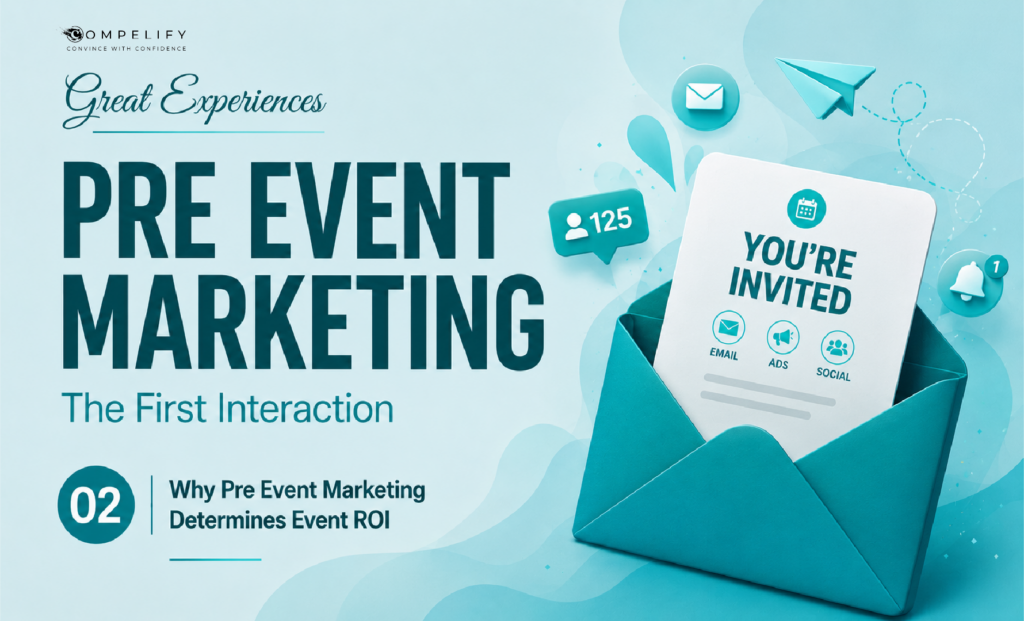
Pre-event marketing.

Long before the event begins, audience perception is already being shaped. Awareness campaigns, messaging strategy, promotional materials, communication consistency, and early engagement efforts all begin determining how effectively the event will ultimately perform.

In many cases, event ROI is being influenced weeks before the first attendee ever walks through the door.

Attendance Alone Does Not Determine Success

Many organizations evaluate event performance primarily through attendance numbers.

Higher registration totals often feel like the clearest indicator of success. More attendees create the appearance of stronger momentum, larger opportunities, and greater overall reach. While attendance certainly matters, registration numbers alone rarely tell the full story.

The real value of an event comes from engagement quality.

Who attends often matters far more than how many attend. Audience alignment, attendee intent, buying readiness, partnership opportunities, and overall participant engagement directly influence whether the event generates meaningful business outcomes.

This is where pre-event marketing becomes critical.

Marketing efforts before the event determine who becomes interested enough to engage. Messaging influences audience expectations. Promotional strategy helps attract the right attendees instead of simply maximizing volume.

Strong pre-event marketing does more than drive attendance.

It helps shape the quality of attendance itself.

Early Marketing Builds Audience Commitment

Attending an event requires commitment.

Unlike casual online engagement, events often require attendees to invest significant time and resources. Scheduling adjustments need to be made. Travel may be required. Ticket purchases create financial commitment. Internal approvals sometimes need to happen before participation becomes possible.

This naturally increases hesitation.

Strong pre-event marketing helps reduce that hesitation by building confidence early. Repeated exposure reinforces familiarity while consistent messaging helps audiences understand why attending creates value.

This process builds commitment gradually.

Potential attendees begin seeing speaker announcements, agenda highlights, brand messaging, early promotional content, networking opportunities, and previews of what the experience itself may offer. These touchpoints strengthen confidence while helping audiences justify the investment required to attend.

The stronger this early engagement becomes, the easier conversion becomes once registration opens.

Momentum starts building long before commitment is requested directly.

Event ROI Depends On Audience Quality

Not every attendee contributes equal value.

Organizations sometimes focus heavily on maximizing registration numbers without fully considering whether the audience being attracted actually aligns with broader business goals. High attendance may feel impressive, but event ROI ultimately depends on whether the right people engage with the experience itself.

Pre-event marketing directly influences audience quality.

Targeted messaging helps attract participants who are genuinely aligned with the purpose of the event. Promotional campaigns help establish expectations early, ensuring attendees understand the value being offered before making registration decisions.

Poor marketing often attracts weaker engagement.

Audiences may register without fully understanding what the event offers. Expectations become unclear. Participation quality declines because messaging failed to properly communicate who the event was truly designed for.

Strong events rarely focus only on attendance volume.

They focus on attracting the right audience from the beginning.

Perception Influences Post Event Results

The attendee experience does not begin when the event starts.

It begins during the marketing process itself.

Every email campaign, promotional asset, social announcement, speaker reveal, and registration communication contributes to how audiences perceive the event before arriving. This perception directly influences how engaged attendees feel once the event actually begins.

Stronger anticipation creates stronger participation.

Attendees arriving excited and emotionally invested engage more actively. Networking improves. Participation increases. Sessions feel more valuable because expectations were established clearly beforehand.

This directly influences post-event outcomes.

Lead quality improves.

Brand perception strengthens.

Follow-up engagement increases.

Long-term ROI improves because the event experience was shaped intentionally from the earliest stages.

Great Event Results Begin Long Before Event Day

Successful events rarely generate strong ROI through execution alone.

While event-day logistics certainly matter, financial return is often influenced far earlier in the process. Pre-event marketing builds awareness, creates anticipation, strengthens trust, and helps ensure the right audience arrives already prepared to engage meaningfully.

The strongest event teams understand this relationship early.

They recognize that marketing is not simply a tool for filling seats.

It is part of the event experience itself.

Because event ROI is rarely determined by what happens the day the event begins.

More often, the results were already being shaped weeks earlier through every interaction audiences experienced before ever deciding to attend.

And organizations that understand this consistently create stronger outcomes long before the event itself begins.